
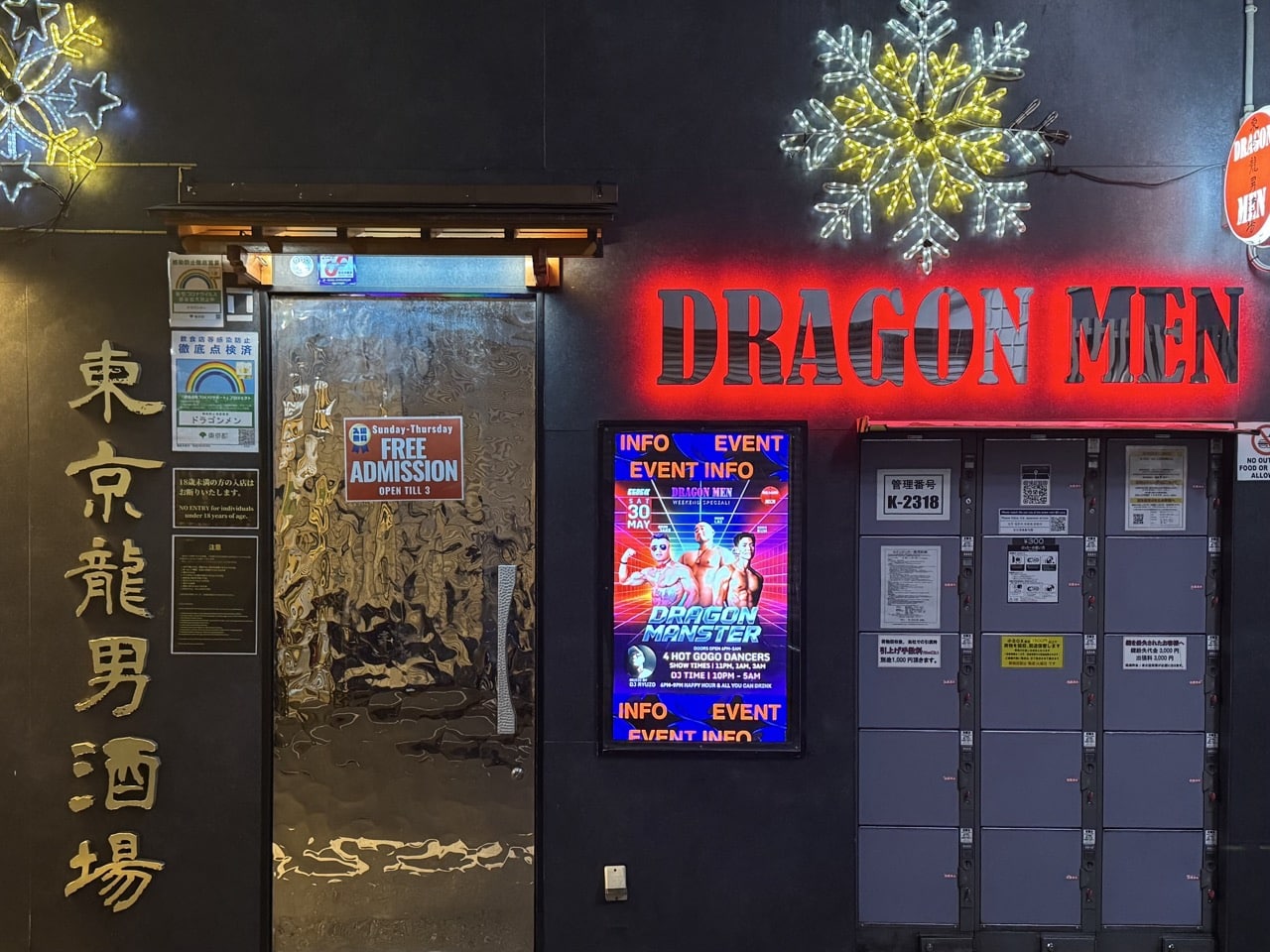
Shinjuku Nichome is Tokyo’s gay district — and one of the most remarkable LGBTQ+ neighborhoods anywhere in the world. Over 450 bars are packed into a handful of narrow streets, a community that has been building itself for decades, and an energy that’s unlike anything else in Japan.
I’m Rei — a Tokyo-born gay man who grew up in this city, and who now runs a massage studio literally one street away from Nichome. I’ve been part of this neighborhood my whole life, not as a visitor but as a local. This guide is what I’d tell a friend visiting for the first time: what Nichome actually is, who it’s for, how to navigate it, and how to make the most of it.
What Is Shinjuku Nichome?
Shinjuku Nichome is more than just a nightlife district. To understand what makes it special — and how to navigate it as a visitor — it helps to know a little about its origins and what sets it apart.
A brief history: how Nichome became Tokyo’s gay district
Nichome’s identity as a gay district didn’t happen by accident — it emerged through decades of social change, displacement, and community building.
The roots of the neighborhood’s queer culture trace back to the postwar period. Following the decline of Tokyo’s traditional red-light districts and the passage of the Prostitution Prevention Law in 1956, small bars and social spaces catering to gay men began appearing in Shinjuku Nichome. By the 1960s and 70s, the area had developed a recognizable underground gay scene — largely invisible to mainstream Japanese society, but deeply important to the people who built it.
Over time, Nichome became one of the few places in Tokyo where small independent bars could continue to survive, allowing an unusually dense and specialized queer nightlife culture to grow. The result is what you see today: more than 450 venues packed into just a few city blocks, often described as the highest concentration of gay bars anywhere in the world.
Not because it was master-planned, but because generations of people kept returning, opening doors, and creating community there.
What makes Nichome different from other gay areas in the world
I’ve spent time in gay districts across Europe, Asia, and the Americas — Chueca in Madrid, The Castro in San Francisco, Soho in London. None of them feels quite like Nichome.
The difference isn’t just the density, though that’s part of it. It’s what the density creates. Compared with most gay districts, the bars in Nichome are extraordinarily small — some seat fewer than ten people — and many have their own distinct identity, regulars, and social rhythms. A mama-san who has run the same bar for thirty years. Customers who have been coming every week since the 1990s. A bottle-keep system where regulars leave their shochu bottles between visits because everyone assumes they’ll return.
Walking through Nichome doesn’t feel like visiting a single gay district. It feels more like passing through hundreds of micro-communities, each existing behind its own door. That’s what makes the area special — and also what can make it feel occasionally impenetrable to outsiders.
LGBTQ+ rights in Japan: context for visitors
Japan’s relationship with LGBTQ+ rights is complicated and worth understanding before you arrive.
On one hand, Japan has never criminalized homosexuality, and Tokyo in particular is a safe and tolerant city. Violence against LGBTQ+ people is rare. Open hostility is rarer still. For most gay visitors, daily life in Tokyo will feel perfectly comfortable.
On the other hand, Japan still does not legally recognize same-sex marriage at the national level, and many LGBTQ+ people remain cautious about being openly out in professional or family settings. Being openly gay carries a different social weight here than it does in many Western countries. Many gay Japanese men lead double lives — out in Nichome, closeted everywhere else. The bars in Nichome have long existed partly because they provide a space where that mask can come off.
For foreign visitors, the practical implications are limited. You will not face legal issues for being gay, and you are unlikely to encounter overt hostility. But understanding this context helps explain why Nichome is what it is — not just a nightlife district, but a genuine refuge for a community that has had to create its own spaces with relatively little formal institutional support.
Who Is Welcome in Nichome?
The short answer is: more people than you might expect. But the honest answer is more nuanced than that.
Is Nichome only for gay men?
Technically, no. In practice, the majority of Nichome’s bars and venues cater primarily to gay men — that’s the community that built the neighborhood, and it remains the dominant demographic. But the reality is more nuanced than a simple yes or no.
Lesbians and bisexual women have their own spaces within Nichome, though fewer in number. Several bars cater specifically to women, and mixed venues exist where all are welcome. Transgender people have long been part of the community here as well. Straight visitors come too — particularly on weekends, when some of the more internationally oriented bars draw a mixed crowd.
The honest answer is: it depends on the bar. Some are explicitly men-only. Some are women-only. Many are open to anyone. The neighborhood as a whole has a broad LGBTQ+ identity, even if individual venues vary widely. If you’re unsure whether a particular bar is right for you, the best approach is simply to look through the door before you walk in — you’ll usually get a feel for the atmosphere immediately.
Are foreigners welcome?
This is probably the question I get asked most often, and the honest answer is: it depends.
Nichome has quite a few bars that are not really set up for foreign visitors — not out of hostility, but for practical and cultural reasons. Most bar staff don’t speak English, and Japanese bar culture has its own unwritten rules around conversation, pricing, karaoke, and etiquette that can be difficult to navigate without the language. Some bars have built their identity around a tight-knit community of Japanese regulars, and walking in as a stranger can feel uncomfortable regardless of nationality.
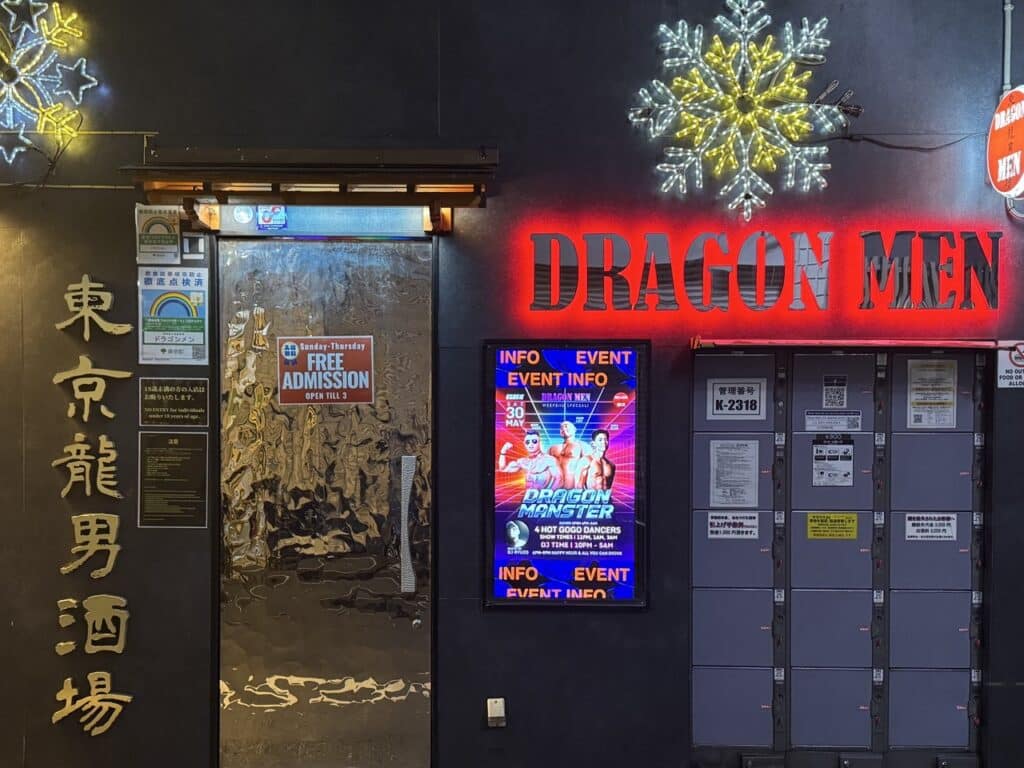
At the same time, Nichome has never been more internationally accessible than it is today. Several bars — particularly newer and more internationally oriented ones — have English-speaking staff, actively welcome foreign visitors, and attract genuinely mixed crowds. Places like KING TOKYO, EAGLE TOKYO, Dragon Men, and AiiRO Cafe are among the most foreigner-friendly venues in the neighborhood.
For a detailed guide to which bars are genuinely welcoming to foreign visitors — and how to navigate the ones that aren’t — see our full guide to gay bars in Shinjuku Nichome.
Is Tokyo gay friendly?
By Asian standards, yes. By global standards, it depends on what you mean.
Tokyo is a safe city for gay travelers. Public spaces are generally welcoming, and overt discrimination is uncommon in day-to-day travel experiences. The city has a visible and established LGBTQ+ community, and you are unlikely to experience harassment, violence, or open prejudice during a visit.
What Tokyo doesn’t offer — and what some visitors find surprising — is the kind of openly expressive gay culture that exists in cities like Barcelona or New York City. Public displays of affection between same-sex couples are uncommon, not because they’re prohibited, but because they run counter to Japanese social norms around public behavior generally. Discretion is the default — for gay and straight couples alike.
Within Nichome, the atmosphere shifts noticeably. Inside the bars and clubs, gay couples openly flirt, touch, and show affection in ways you rarely see elsewhere in Tokyo. Gay life becomes visible, celebrated, and entirely ordinary. For many visitors, the contrast between the restraint of the rest of the city and the energy of Nichome is part of what makes the neighborhood so compelling.
Getting to Shinjuku Nichome
By train: best exits and stations
The easiest way to reach Nichome is by subway. The closest station is Shinjuku-sanchome Station, served by three lines:
- Tokyo Metro Marunouchi Line
- Tokyo Metro Fukutoshin Line
- Toei Shinjuku Line
Use Exit C8 — you’ll be at the western edge of Nichome within a couple of minutes on foot.
You can also walk from Shinjuku Station, Tokyo’s main JR hub, though it takes around 10–15 minutes depending on which exit you use. Head east along Shinjuku-dori toward Shinjuku-sanchome. Once you cross Meiji-dori, the atmosphere starts to shift, and Nichome begins to appear around you.
Getting around the area on foot
Once you’re in Nichome, everything is walkable. The entire district is compact enough to cross on foot in under five minutes, which makes bar-hopping easy — you’re never more than a short walk from the next venue.
Nakadori runs through the heart of the neighborhood and is the easiest place to orient yourself. AiiRO Cafe sits right at Nakadori Crossing and functions as one of Nichome’s main landmarks. If you ever get turned around, finding AiiRO will usually get you back on track.
One practical note: Nichome’s streets are narrow, and much of the signage is still in Japanese. On your first visit, it helps to save the addresses of the venues you want to visit in Google Maps before heading out.
Last train and late-night options
Tokyo’s trains stop running between midnight and 1am depending on the line, so if you’re planning a late night in Nichome, it’s worth checking your route in advance.
The last trains from Shinjuku-sanchome Station generally leave around midnight. Setting a rough reminder for 11:30pm isn’t a bad idea if you want to avoid missing the last one. From the center of Nichome, the station is only about a five-minute walk away.
If you do miss the last train, taxis are easy to find around Shinjuku at any hour, though fares increase after 10pm. Several gay saunas in the area also operate 24 hours and offer places to rest.
For more details on late-night options and how to get the most out of a night in Nichome, see our full guide to gay bars in Shinjuku.
Gay Bars, Clubs & Nightlife
Nichome’s nightlife is the reason most people come here — and with more than 450 venues packed into a handful of streets, the options can feel overwhelming on a first visit. The key is knowing which bars are genuinely comfortable for foreign visitors and which ones are built more around long-time local regulars.
Best gay bars for foreign visitors
The bars that work best for international visitors tend to share a few things in common: English-speaking staff, clearly explained pricing systems, and crowds where Japanese locals and foreigners mix comfortably.
The standout options right now include KING TOKYO — one of the most talked-about newer bars in Nichome, with an international team and a high-energy crowd — along with EAGLE TOKYO, which has long been the neighborhood’s best-known international gay bar, AiiRO Cafe at Nakadori Crossing, and ALAMAS CAFE, which doubles as a restaurant and is one of the easiest places for first-time visitors to walk into comfortably.
Happy hour at many of these venues runs from around 6pm to 9pm, making early evening one of the best times to start exploring.
Best gay clubs for dancing and late nights
When the smaller bars start to feel too quiet, and you’re ready to dance, places like Dragon Men and Eagle Blue, and Kingdom Tokyo keep Nichome going well into the night. Weekend events usually involve an entry charge, and some venues stay open until around 5am on Fridays and Saturdays.
For a full breakdown of venues — including cover charges, opening hours, and what kind of crowd each place attracts — see our complete guide:
Gay Saunas & Cruising Spots
Nichome and the surrounding area have a well-established gay sauna scene — distinct from the onsen and public bathhouses covered in the next section, and worth understanding separately.
Gay saunas in Tokyo are essentially social and cruising spaces for gay men. They typically include hot tubs, steam rooms, relaxation areas, and private spaces, and operate quite differently from mainstream bathing facilities. The most well-known is 24 Kaikan Shinjuku, which also has branches in Ueno and Asakusa. Each location has its own atmosphere and clientele.
For those looking for cruising bars rather than saunas, Deepthroat Men in Shinjuku is among the most searched-for venues in Tokyo.
Gay-Friendly Onsen & Bathhouses
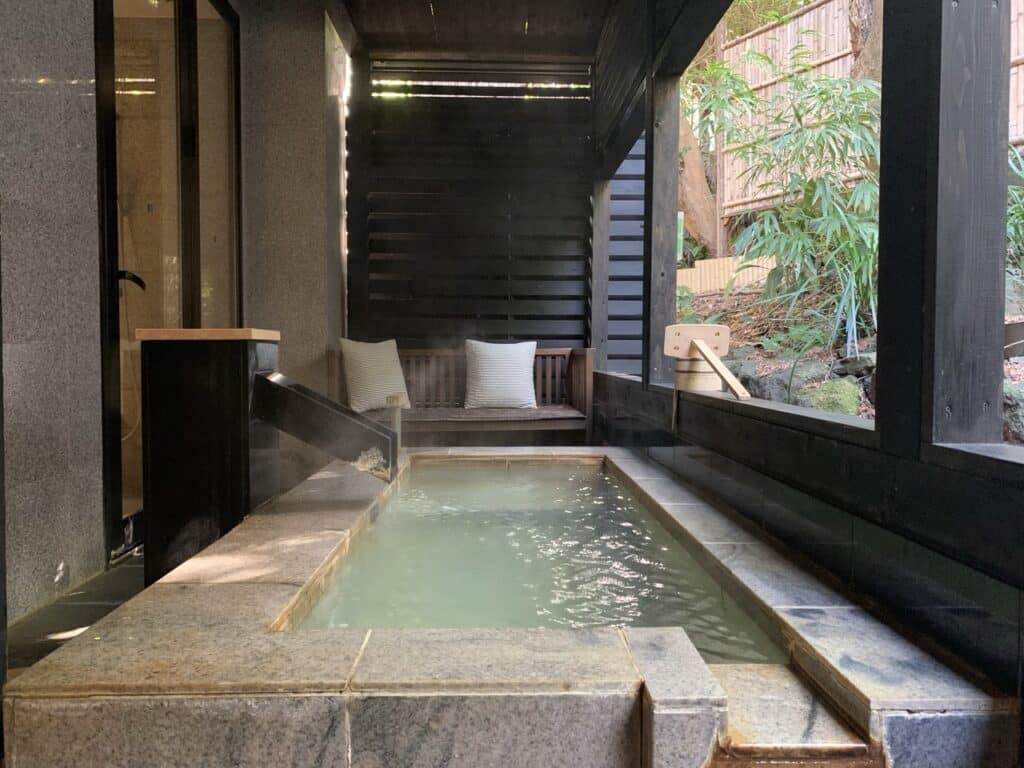
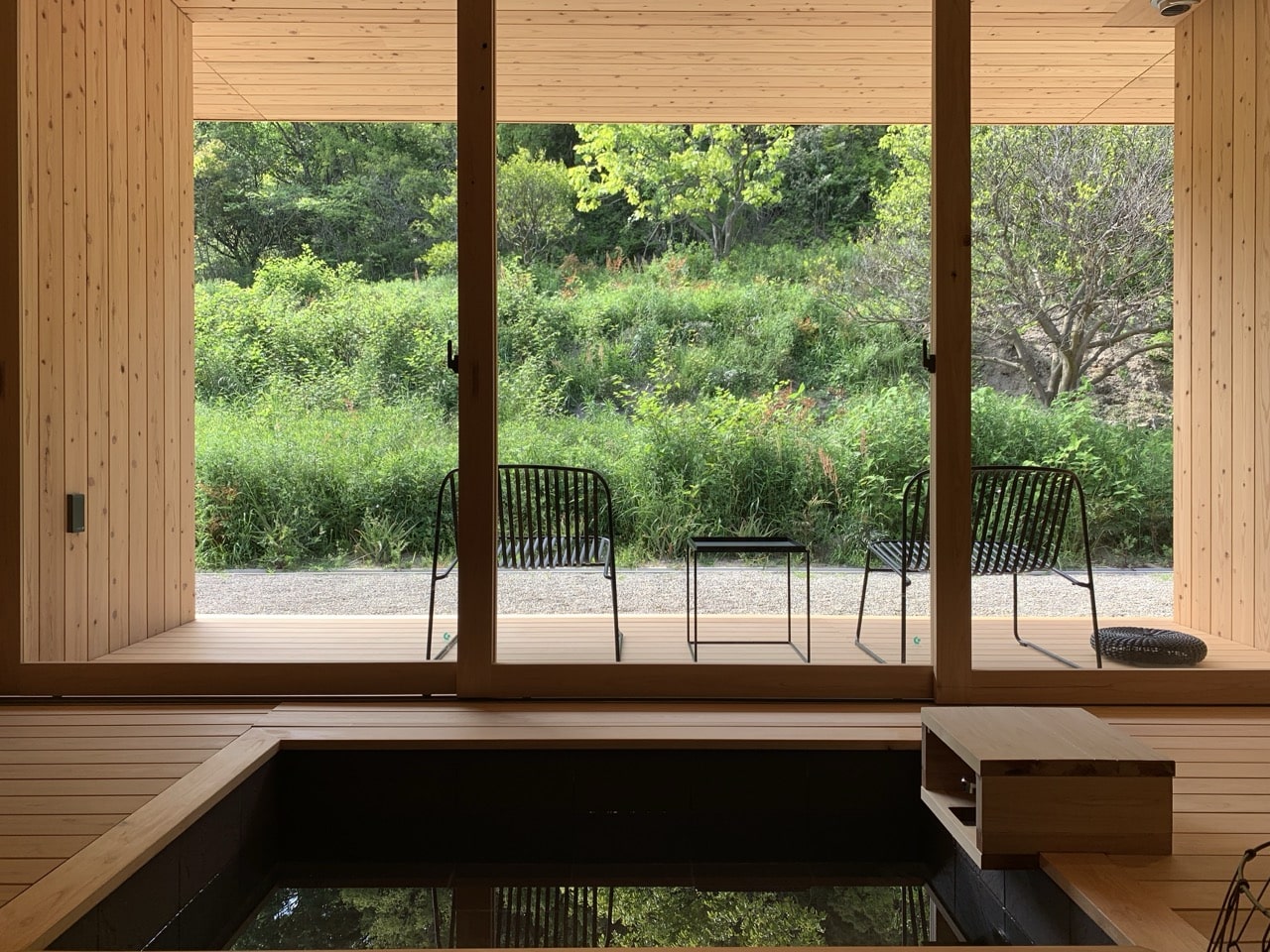
Beyond Nichome’s bars and saunas, Tokyo has a quietly established scene of onsen and public bathhouses that are popular with gay men — not because they market themselves that way, but because word has spread through the community over time.
These are mainstream public facilities used by everyone, gay and straight alike. Sexual activity and overt cruising are strictly off-limits.
The options range from Thermae-Yu, a 24-hour hot spring just a short walk from Nichome, to Maenohara Onsen Saya no Yudokoro in Itabashi — a traditional onsen with a beautiful garden setting that offers genuinely good value for the experience. For visitors with tattoos, Thermae-Yu accommodates foreign male visitors with a tattoo sticker regardless of size, and Kairyo-yu in Shibuya has no tattoo restrictions at all.
For the full guide — including facilities, opening hours, tattoo policies, and how to use an onsen as a first-timer — see our complete guide:
Gay Massage in Tokyo
Tokyo has a wide range of massage options for gay men — but not all of them are the same thing, and knowing the difference before you book will save you from an awkward situation.
The majority of services that appear under “gay massage tokyo” are escort-style services where sexual contact is the main event. These are legal within certain parameters, widely available, and popular among both local and foreign visitors. Several well-established options operate in Tokyo with English support, including Red Line, Namwa, NONKE SPA, Satyroi, and Prostate’s Den Tokyo.
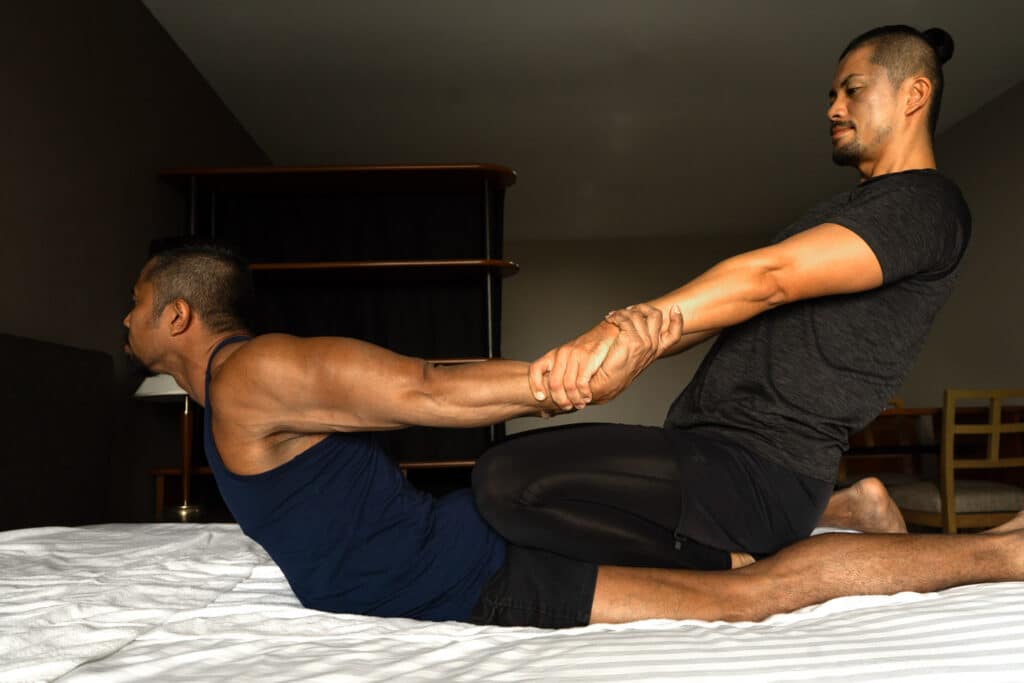
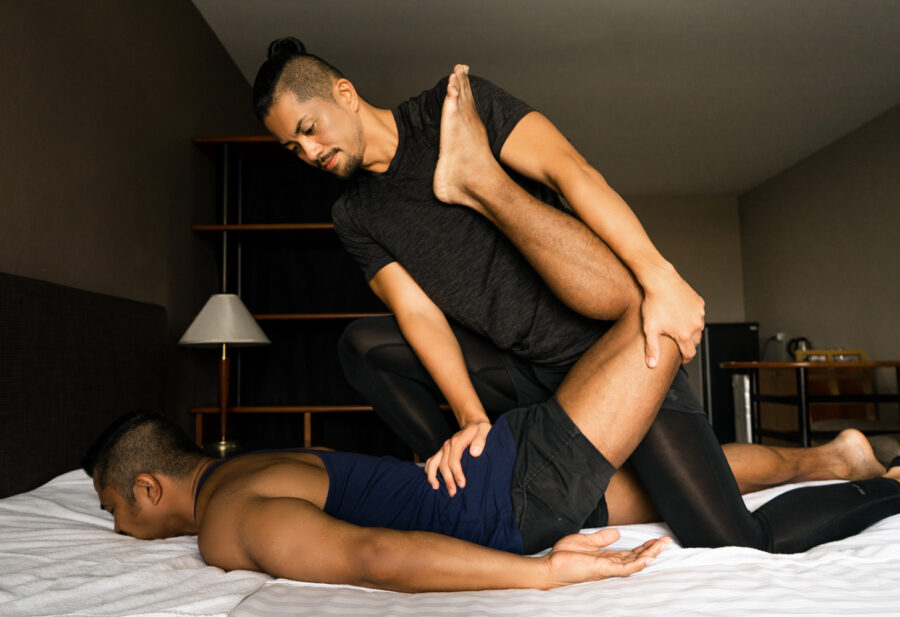
If you’re looking for a professional, non-sexual massage in a gay-friendly environment — skilled hands, real technique, and genuine physical recovery — the options are more limited. Male Massage Masotera Tokyo, located one street from Nichome, is a professional male massage studio run by gay therapists with English-speaking staff, over 100 five-star Google reviews, and a TripAdvisor Travelers’ Choice 2026 award. It’s the only studio of its kind in Tokyo.
For a full breakdown of both categories — including specific services, pricing, and practical booking tips — see our complete guide:
Where to Stay Near Nichome
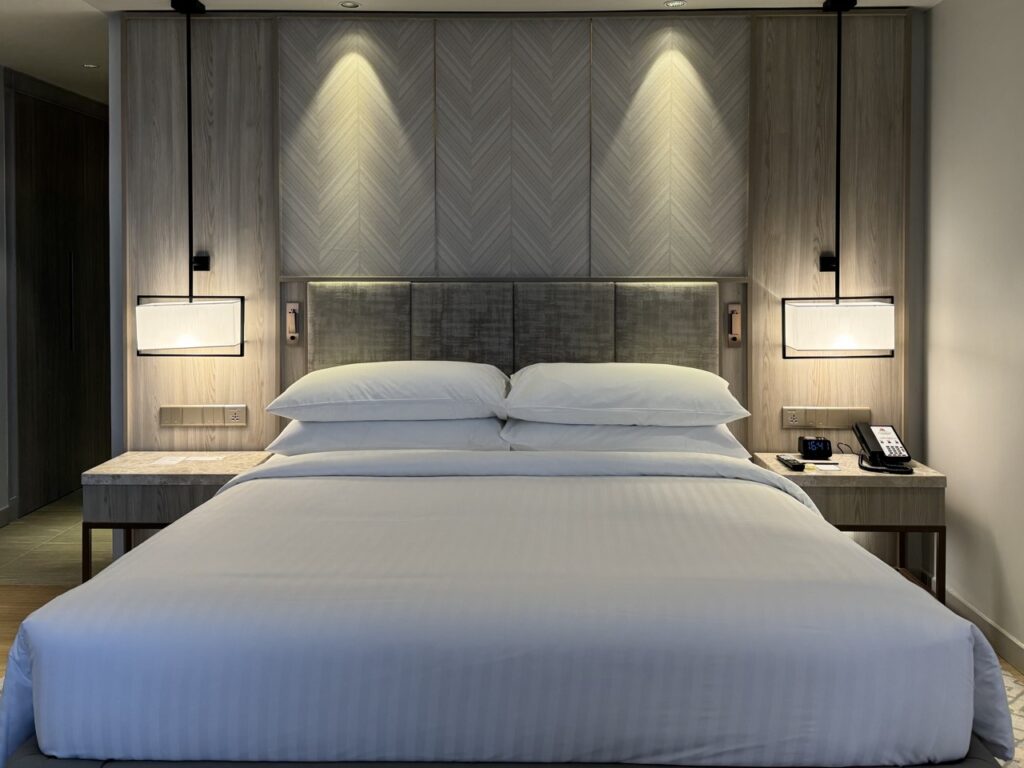
Shinjuku is the obvious base for gay travelers visiting Tokyo — not just because of Nichome, but because of the area’s transport links, hotel variety, and concentration of everything you might want within walking distance.
For luxury stays, the Park Hyatt Tokyo remains one of the most iconic hotels in the city — made famous by Lost in Translation and still delivering impeccable service decades later.
Hotel Groove Shinjuku is the hotel that gay tour operators repeatedly choose for their Japan itineraries.
Kimpton Shinjuku is one of the few hotel brands that explicitly states its LGBTQ+ welcome policy across all properties worldwide.
For mid-range options, Onsen Ryokan Yuen Shinjuku offers a genuine ryokan experience with a rooftop onsen fed by hot spring water from Hakone — a short walk from Nichome.
&Here Hotels Shinjuku is a stylish newer property located right in the middle of Nichome itself.
APA Hotel Shinjuku Gyoemmae is a reliable, no-fuss option steps from Nichome with a large communal bath.
For the full guide — including detailed reviews and tips for LGBTQ+ travelers checking in as a couple — see our complete guide:
Eating and Drinking Around Nichome
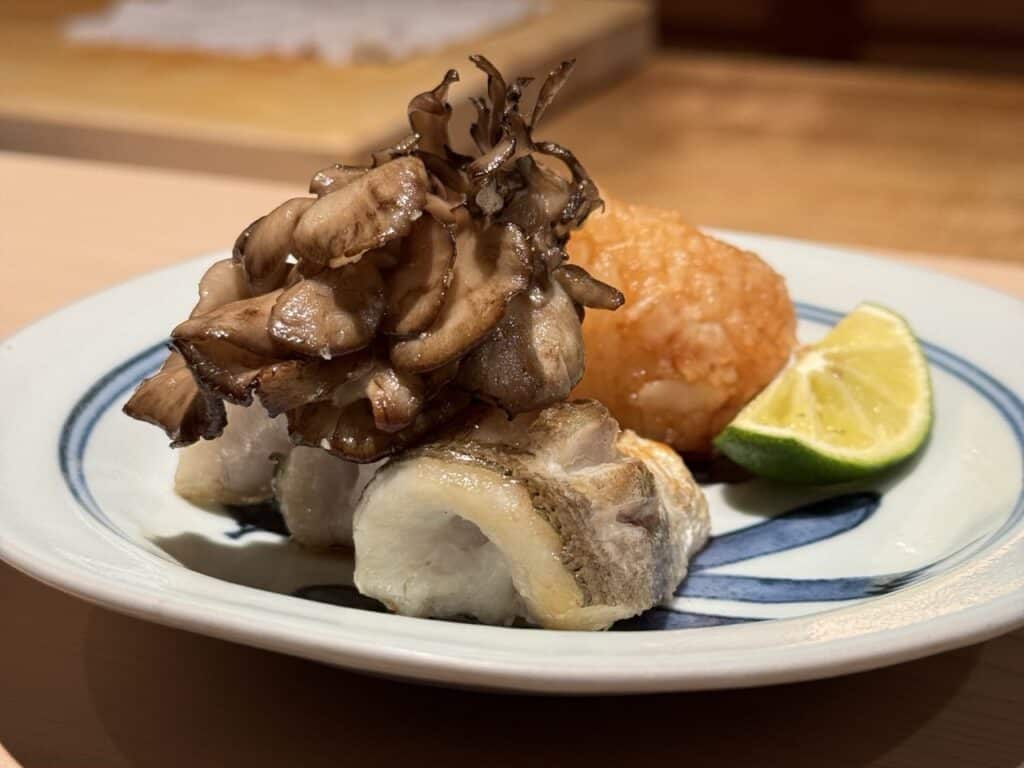
Nichome is primarily a nightlife district, but the surrounding area has good options for eating and drinking — whether you’re fueling up before the bars or looking for something to do during the day.
Alamas Cafe
For something closer to Nichome, Alamas Cafe in the heart of the neighborhood serves Mexican-inspired food alongside cocktails from 6pm — one of the few places in Nichome where you can eat a proper meal before heading to the bars.
Kazuto Inakano Utsuwa
For a more special dining experience, Kazuto Inakano Utsuwa is a Japanese restaurant run by Kazuto, who became well known through Netflix’s The Boyfriend — Japan’s first same-sex dating show. A 14-course meal served in two sittings (5pm and 8pm). Reservations required, typically a month in advance. Located near Higashi-Shinjuku Station, a short walk from Nichome.
World Meatball Classics
One block from Nichome, World Meatball Classics is a casual, foreigner-friendly restaurant with a rainbow flag displayed outside. Handmade meatballs and international dishes — open for lunch and dinner, closed Tuesdays.
Events and Annual Highlights
Tokyo Pride — Japan’s biggest LGBTQ+ celebration
Tokyo Pride takes place annually in June at Yoyogi Park. The festival runs over two days, featuring over 200 booths from LGBTQ+ organizations and community groups, along with live stage performances — free entry. The Pride Parade takes place on Sunday, marching a 3km route through Shibuya and Harajuku. Pre-registration is required if you want to march.
For Nichome specifically, Pride weekend is the busiest time of year. The bars fill up early, queues form outside the clubs, and the energy in the neighborhood is unlike any other night.
Rainbow Reel Tokyo — LGBTQ+ film festival
Rainbow Reel Tokyo is Japan’s longest-running LGBTQ+ film festival, typically held in July at venues around Shinjuku. It screens international and Japanese queer cinema, with Q&A sessions and community events alongside the screenings — a quieter, more cultural counterpart to the energy of Pride month.
Other events throughout the year
Nichome’s bars and clubs host themed nights, anniversary events, and seasonal parties throughout the year — Halloween in late October is particularly lively, with the neighborhood’s bars going all-out on costumes and decorations. New Year’s Eve countdown is another peak night. For specific events, following the Instagram accounts of the bars you’re interested in is the most reliable way to stay updated.
Nearby Attractions
Nichome sits in the middle of one of Tokyo’s most dense and interesting neighborhoods. Within a short walk, you’ll find:
Shinjuku Gyoen National Garden — a 10-minute walk from Nichome, one of Tokyo’s finest parks with 58 hectares of Japanese, French, and English gardens. A genuinely peaceful place to decompress after a big night. Cherry blossoms in late March and early April are spectacular. Entry ¥500.
Golden Gai — a dense cluster of around 200 tiny bars, each with its own personality and regular crowd. Not gay-specific, but one of Tokyo’s most atmospheric drinking destinations. A 5-minute walk from Nichome.
Omoide Yokocho — also known as Memory Lane, a narrow alley lined with tiny yakitori stalls that have been grilling skewers since the postwar era. Smoky, atmospheric, best visited early in the evening. About 15 minutes on foot from Nichome.
Kabukicho — Tokyo’s main entertainment district, 15 minutes north of Nichome. Home to izakayas, karaoke bars, and a famously chaotic energy after dark.
Isetan Men’s — one of Tokyo’s best department stores dedicated entirely to menswear, 5 minutes from Nichome.
Tokyo Metropolitan Government Building — free observation decks on the 45th floor, with panoramic views of the city and Mount Fuji on clear days. Open until 10:30pm.
Gay Tours
If you’d prefer an introduction to Nichome with a knowledgeable local guide, JAPA CHIIILL offers private gay tours of Tokyo specifically designed for LGBTQ+ visitors. Founded by a gay local who knows the neighborhood inside out, the tours cover Nichome’s history, take you into bars that first-timers would never find on their own, and explain the unwritten rules of Japanese queer culture along the way. Featured in UK gay lifestyle magazine Attitude. Details and bookings at japachiiill.com.
Practical Tips for LGBTQ+ Visitors
A few things worth knowing before you arrive — none of them dealbreakers, but all useful for getting the most out of your time here.
Is it safe to be openly gay in Tokyo?
Tokyo is one of the safest cities in the world for gay travelers. Violence and harassment directed at LGBTQ+ people are rare, and you are unlikely to encounter overt hostility in day-to-day situations. Walking around Nichome — or anywhere in Shinjuku — as a gay man is not something that requires caution.
That said, Japan is a socially conservative country in many respects. Public displays of affection are uncommon here, even among straight couples — it’s simply not part of the culture. Overly affectionate behavior in public tends to attract attention regardless of the sexualities involved, so it’s worth keeping that in mind outside of Nichome. Inside the neighborhood itself, the atmosphere is noticeably more relaxed and open.
Beyond that, use your judgment as you would in any unfamiliar city.
Gay dating apps popular in Nichome
The most widely used gay dating and hookup apps in Tokyo are:
- 9monsters — the most popular app among Japanese gay men, with a distinctly Japanese aesthetic and monster-themed profile system. Worth downloading if you want to connect with locals rather than just other tourists.
- Grindr — the most internationally recognized app, widely used by expats, foreign visitors, and English-speaking locals.
- Scruff — particularly popular among the bear community.
- Jack’d — popular among a more diverse demographic.
- Tinder — less hookup-focused than the others, but widely used in Japan, including by gay men, particularly those looking for something more than a one-night connection.
A note: many Japanese users on these apps may be cautious about meeting strangers, particularly foreigners. Don’t be discouraged if response rates feel lower than you’re used to at home — it’s cultural, not personal.
Useful Japanese phrases for LGBTQ+ travelers
You don’t need to speak Japanese to enjoy Nichome, but a few words go a long way:
- Sumimasen (すみません) — Excuse me. Use to get a bartender’s attention.
- Kore wo kudasai (これをください) — I’ll have this one. Point at the menu.
- Ikura desu ka? (いくらですか?) — How much is it?
- Kanpai! (乾杯!) — Cheers!
- Oishii! (おいしい!) — Delicious! Works for drinks too.
- Sumimasen, gaijin OK? (すみません、外人OK?) — Excuse me, is it OK for foreigners? Useful at the door of a bar you’re not sure about.
Photography etiquette in Nichome
Nichome may be a photogenic neighborhood for tourists, but it’s also a community space where many people value their privacy — particularly given Japan’s complicated relationship with LGBTQ+ visibility.
As a general rule, photograph the streets, the signs, and the architecture freely. Ask before photographing people, especially inside bars. Many patrons are not out to their families or colleagues, and an unguarded photo shared on social media can have real consequences. If you’re unsure, ask the staff.
Start Your Nichome Experience with a Massage
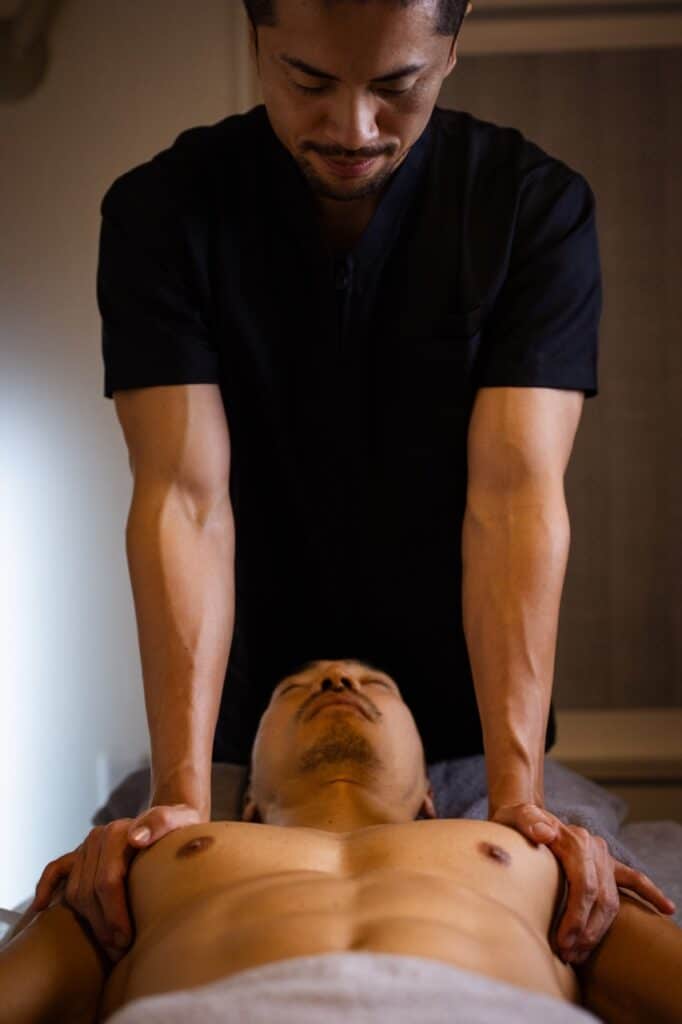
Whether you’ve just landed after a long flight, spent a full day walking Tokyo’s endless streets, or are winding down after a big night in Nichome, a professional massage by a male massage therapist is one of the best ways to begin or reset a trip.
Male Massage Masotera Tokyo is a professional, non-sexual male massage studio located literally one street away from Nichome. Run by Rei — a Tokyo-born gay man and the author of this guide — it’s a calm, English-speaking, judgment-free space where gay, bisexual, queer, and straight men are all equally welcome. Sessions combine Thai massage techniques with oil work, targeting the whole body rather than isolated areas.
With over 100 five-star Google reviews and a TripAdvisor Travelers’ Choice 2026 award, Masotera Tokyo has built a reputation as one of the best massage studios in Shinjuku — recommended by hotel concierges and returning visitors alike. Two private rooms mean couples and friends can book simultaneous sessions. Open 9am-10pm every day. Easy online booking. No advance payment required.


Comments