Tokyo has some of the best bathing culture in the world.
I’m Rei, a Tokyo-born gay man who runs a male massage studio in Shinjuku, literally one street away from Ni-chome, the gay district. Like most Japanese people, I grew up loving onsen and sento — it’s simply part of life here. Over the years, a number of my clients — gay travelers from around the world — have asked me the same question: where should I actually go?
This is my answer.
TOC
Gay Men and Tokyo’s Onsen Culture: What You Need to Know First
A Note on Behavior: Keep It Respectful
First, an important distinction: the onsen and spas in this guide are not gay saunas. Unlike venues like 24 Kaikan — which are specifically designed as cruising and play spaces for gay men — these are mainstream public bathing facilities used by everyone, gay and straight alike, that happen to be particularly popular within the gay community. Sexual activity, overt cruising, and any behavior that would make other bathers uncomfortable are strictly off-limits.
That said, you’ll find a relaxed, quietly welcoming atmosphere at all of these venues. Nobody is going to give you a second look for being gay. Same-sex couples soaking together, gay groups of friends, men who are clearly there to enjoy the facilities rather than pursue anyone — all of this is completely normal and unremarkable. The rule is simple: enjoy the baths, respect the space, and leave the cruising for somewhere it’s actually welcome.
Looking for something more? Gay saunas and cruising spots in Tokyo
The venues in this guide are mainstream public bathhouses — relaxing, welcoming, but not cruising spaces. If you’re looking for something with a different purpose, Tokyo has plenty of options for that, too.
The most well-known are the 24 Kaikan locations — multi-floor gay saunas with branches in Shinjuku (right in Ni-chome), Ueno, and Asakusa. It’s worth noting that, despite the name, gay saunas like 24 Kaikan are a completely different experience from the onsen and super sento in this guide. They are designed specifically as cruising and play spaces for gay men, not as places to relax and enjoy the bathing facilities. The hot tubs and steam rooms are there, but they serve a different function.
For cruising bars, Deepthroat Men in Shinjuku and Glory Hole Bar in Ueno are among the most searched-for venues in Tokyo — both catering to a specific crowd and open late into the night.
Is it awkward to go to an onsen as a gay man?
Honestly? Less than you might expect.
Japan’s bathing culture is built around a shared understanding of the bath as a place of relaxation and cleanliness — not socializing, not showing off, and certainly not sexual activity. Everyone keeps to themselves, eyes are generally kept forward, and the atmosphere is calm and unhurried. As a gay man, you’re likely to find it far less stressful than a gym locker room back home.
The elephant in the room: yes, you will be naked around other men. But in an onsen context, nudity is so normalized and so stripped of any erotic charge that most people find it stops feeling like a big deal within about five minutes of walking in. The focus is on the water, the heat, the quiet. That’s it.
What’s the difference between onsen, sento, and super sento?
These three terms get used interchangeably, but they’re actually different things — and knowing the difference will help you choose the right venue.
Onsen (温泉)
Natural hot spring water, sourced from underground. The water contains minerals that vary by location and are said to have therapeutic properties. Genuine onsen water has a distinct feel — softer, sometimes slightly sulfuric, noticeably different from tap water. This is the gold standard of Japanese bathing.
Sento (銭湯)
A traditional public bathhouse that uses heated tap water rather than natural spring water. Historically, sento existed because most homes didn’t have private baths. Many have closed in recent decades, but those that remain are often beautifully maintained, affordable, and deeply local in character.
Super sento (スーパー銭湯)
A modern, large-scale bathing complex that typically combines onsen or sento bathing with additional facilities: saunas, rest areas, restaurants, massage services, and sometimes overnight accommodation. All the venues in this guide fall into this category. Think of it as a full-day wellness experience rather than just a bath.
For foreign visitors, super sento is usually the easiest and most rewarding entry point into Japanese bathing culture.
Tattoo policies: what to know before you go
Facility
Tattoo Policy
Thermae-Yu Shinjuku
Foreign male visitors: OK with a tattoo sticker (¥330), any size. Japanese men: Not permitted
Ofuro no Osama Oimachi
Not permitted
Spa LaQua
Not permitted
Sengawa Yukemuri no Sato
Not permitted
Toshimaen Niwa no Yu
Not permitted
Maenohara Onsen Saya no Yudokoro
OK if coverable with up to 2 cover seals (¥310/seal).
Kairyo-Yu
Fully permitted, no restrictions
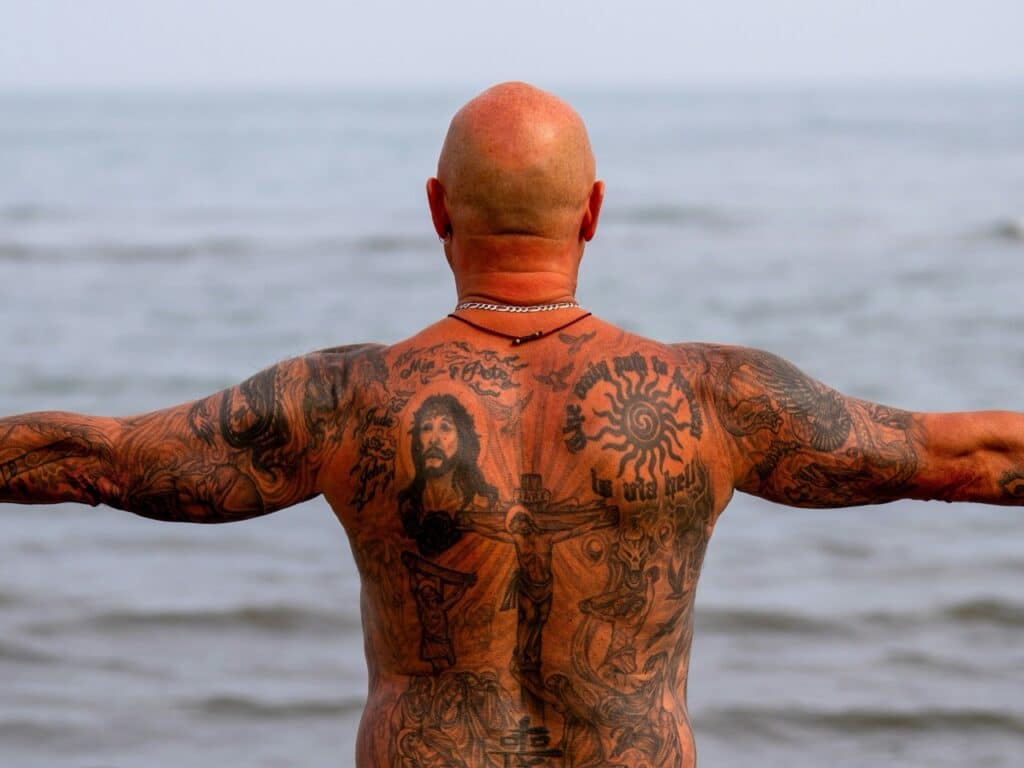
Tattoos and Japanese bathing facilities have a complicated history. Traditionally, tattoos were associated with the yakuza (Japanese mafia), and most onsen banned them categorically. That policy is changing — slowly — but it still varies significantly from venue to venue.
If you have tattoos, your options are limited but not zero. Thermae-Yu and Maenohara Onsen Saya-no Yudokoro both allow entry if your tattoos can be fully covered with their designated cover seals — making them the best options for anyone with smaller tattoos. Thermae-Yu has the added advantage of being the closest venue to Shinjuku Ni-chome, the gay area. If your tattoos are extensive, unfortunately, most facilities in this guide won’t be an option — it’s worth checking each venue’s policy directly before you go.
Etiquette basics: how to use an onsen without embarrassing yourself
Japanese bathing etiquette isn’t complicated, but getting it wrong can cause genuine offense. Here’s what you need to know:
Before entering the bath:
Shower thoroughly at the washing station before getting into any communal bath. This is non-negotiable. Each station has a stool, a handheld shower, and soap and shampoo. Use them.
Remove all clothing before entering the bathing area. Swimwear is not permitted in traditional onsen or sento bathing areas (though some super sento have mixed-gender zones where swimwear is required — these are clearly marked).
In the bath:
Don’t put your towel in the water. Fold it and place it on your head, or leave it at the edge of the bath.
Keep noise to a minimum. This is a place of quiet relaxation.
Don’t drain the water from the bath by splashing excessively.
If the bath is full, wait patiently rather than squeezing in.
General:
Most facilities provide a small towel with entry. A large bath towel can usually be rented for an additional fee.
Credit cards and IC cards like Suica are accepted at most super sento, but bring cash as backup.
Lockers are provided for your belongings. Keep your locker key with you at all times — it’s usually attached to a wristband.
Best Onsen & Spas in Tokyo Popular with Gay Men
The venues below range from a 24-hour hot spring steps from Ni-chome to a traditional sento with no tattoo restrictions — all popular with gay men in Tokyo. What they have in common: good facilities, a relaxed atmosphere, and a quietly established reputation among gay men in Tokyo. None of them market themselves as gay venues — they don’t need to.
Thermae-Yu Shinjuku — 24 hours, steps from Ni-chome
If you’re spending time in Ni-chome, the gay area, and want to add a proper onsen experience to your night — or your morning after — Thermae-Yu is the obvious choice. It’s located in Kabukicho, a short walk from Shinjuku-sanchome Station, which puts it within easy reach of the bars and clubs of Ni-chome at any hour.
The facility is large by Tokyo standards: six indoor baths including a high-concentration carbonated bath, a silk bath, and a neutral electrolyzed water bath, plus an open-air bath, two saunas, stone spa rooms, and a full restaurant. The natural hot spring water is sourced from Naka-Izu, drawn from 1,500 meters underground. It’s open 24 hours, which makes it a popular option for people waiting for the first train.
For foreign visitors with tattoos, this is your best option in this guide. Male foreign tourists can enter with tattoos covered by the facility’s designated tattoo sticker (¥330 per sticker). Even if the tattoo sticks out beyond the sticker, entry is still permitted.
The late-night surcharge applies between midnight and 6am.
Address
1-1-2 Kabukicho, Shinjuku-ku, Tokyo
Access
3-minute walk from Shinjuku-sanchome Station (Exit B1) 10-minute walk from Shinjuku Station (East Exit)
Hours
Open 24 hours
Price
Monday – Thursday ¥2,900 Fri, Sat, Sun, Public Holidays, and Days before Holidays ¥3,000 A surcharge of ¥900 applies on Saturdays, Sundays, public holidays, and special designated days ¥900 additional Late-night surcharge ¥2,000–¥2,300 (midnight–6am) *Towels and in-house wear included
Tattoos
Foreign male visitors OK with cover seal (¥330, passport required)


Comments